
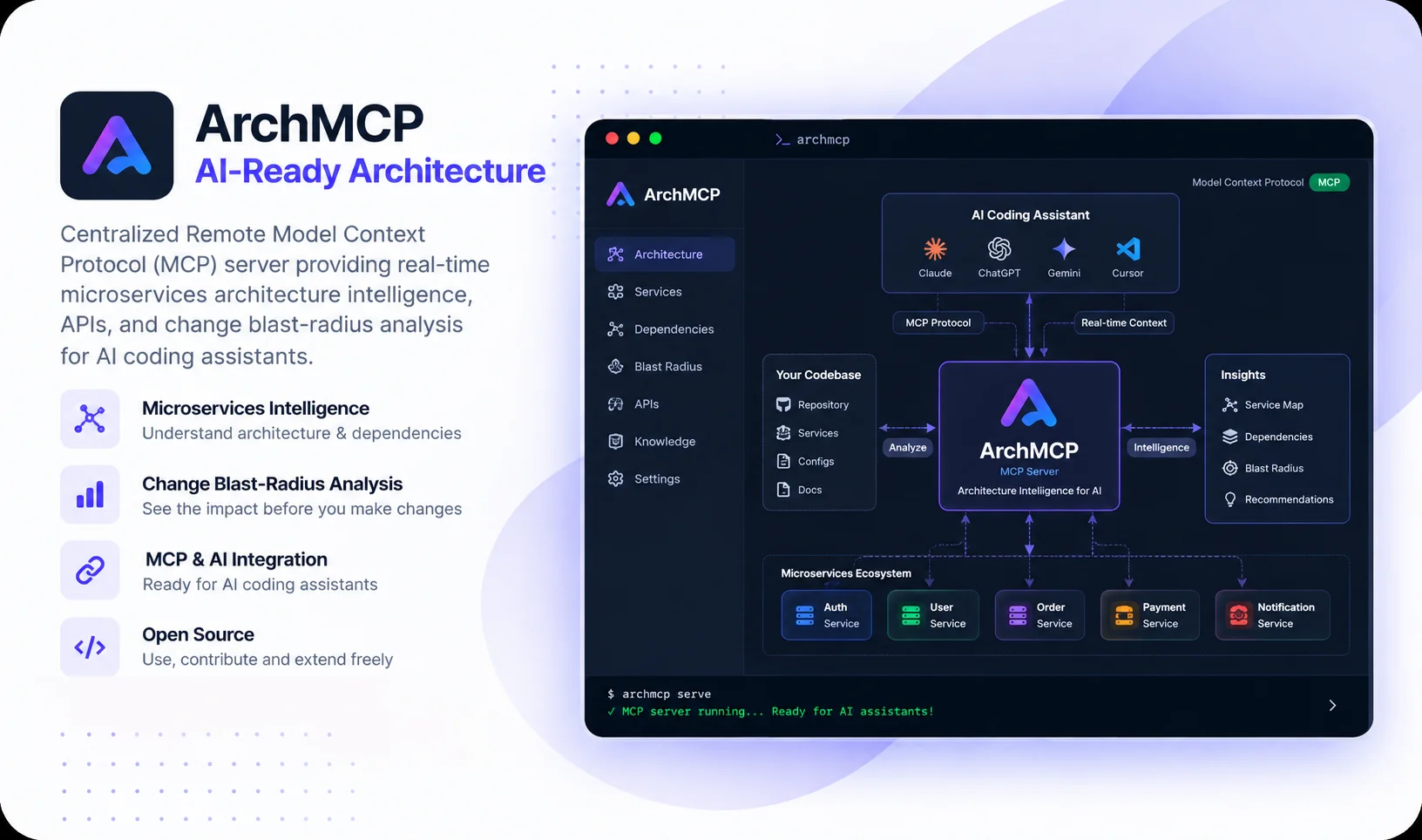
The Problem: Coding Assistants Only See What's Open in Your Editor
When working on modern microservices, AI coding assistants like Cursor, Claude Desktop, and Antigravity are great at editing single files or writing functions.
The friction starts the moment you need to touch a distributed system. By default, an AI assistant only knows about whichever files happen to be open in your tabs. It doesn't know what the other services in your organization are doing, which database tables they share, or what background queues they listen to.
If you ask an assistant to rename an API route or tweak a database column, it has no way of knowing that three other microservices call that route, two event queues publish to it, and a background worker relies on it. To get around this, developers often resort to copying and pasting whole folders or cloning multiple repositories into one giant prompt.
That dumps an overwhelming amount of noise on the model, chews through token budgets, slows down responses, and often leads to subtle hallucinations. I wanted to give assistants what a senior engineer has in their head: a clear mental map of how the entire system connects.
“Dumping twenty git repositories into an AI prompt isn't giving it context—it's just giving it noise. What assistants really need is an accurate map of how the services connect.”
— Shubham Upadhyay